

One of the most common questions we hear from homeowners planning a significant renovation is one most people do not think about until the project becomes real: should we live in the home during the renovation, or should we move out?
It is a question that affects almost everything else - the timeline, the budget, how the project is sequenced, how your family manages day to day for the duration of the work. And it is a question that does not have a universal answer, because the right call depends on the scope of your renovation, the layout of your home, your family's situation, and your tolerance for the realities of living alongside construction.
This guide is designed to help you think through the decision clearly, so you can make the right choice for your specific project before construction begins.
Use the links below to navigate to the sections that interest you:
Why This Decision Matters More Than It Seems
The live-in versus move-out question is often treated as a minor logistics issue. In reality, it has a meaningful impact on both the renovation and your quality of life while it is happening.
Living through the wrong project can mean months of dust, noise, and disruption that affects your work, your sleep, your meals, and your family. Moving out of a project where you could have stayed can mean added costs for temporary accommodation and the strain of being away from home longer than necessary.
Getting this decision right is part of planning a renovation well. It is worth thinking through carefully before construction begins.
When Living in the Home Usually Works
There are specific types of projects where staying in the home is reasonable, and in many cases preferable.
Single-space renovations where the rest of the home is unaffected.
A primary ensuite renovation, a basement development, or a renovation of a space that can be fully contained typically allows the rest of the home to function normally. The construction zone can be sealed off, dust can be managed with proper containment, and daily life continues in the parts of the home that are not being worked on.
Projects where critical systems remain functional.
If your kitchen, at least one bathroom, and your main living and sleeping areas remain available throughout the project, staying is often workable. The disruption is real but manageable.
Shorter projects.
The shorter the construction phase, the easier it is to live through. A six-to-ten-week bathroom renovation is a different experience than a five-month whole home transformation.
Projects where the construction is confined to areas with separate access.
Basement developments, garage conversions, and additions that have their own entry or can be isolated from the main living areas typically have less daily impact on the household.
Families with higher tolerance for disruption.
Some families genuinely do not mind construction. Others struggle significantly with the noise, dust, and loss of routine. Being honest with yourself about where you fall on this spectrum matters.
What Living Through a Renovation Actually Looks Like at Kavaleer
When homeowners choose to stay in the home during a renovation, we treat that decision as a central part of how the project is planned. Before construction begins, we work through a renovation plan that identifies which parts of the home will be designated as the active construction zone and which will remain the family’s day-to-day living space.
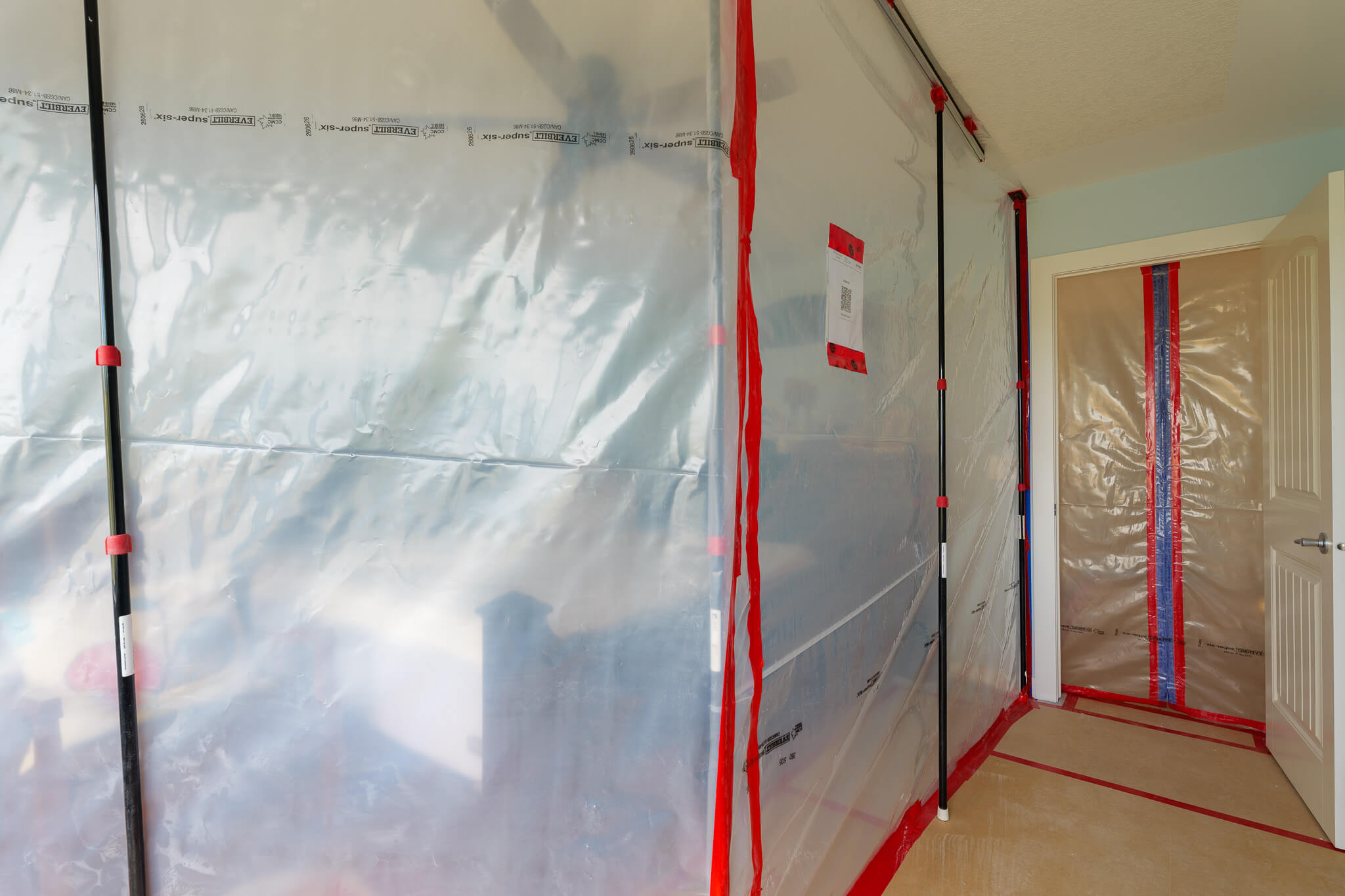
From there, protecting the home and making daily life workable comes down to a few specific practices:
Clear separation between construction and living areas.
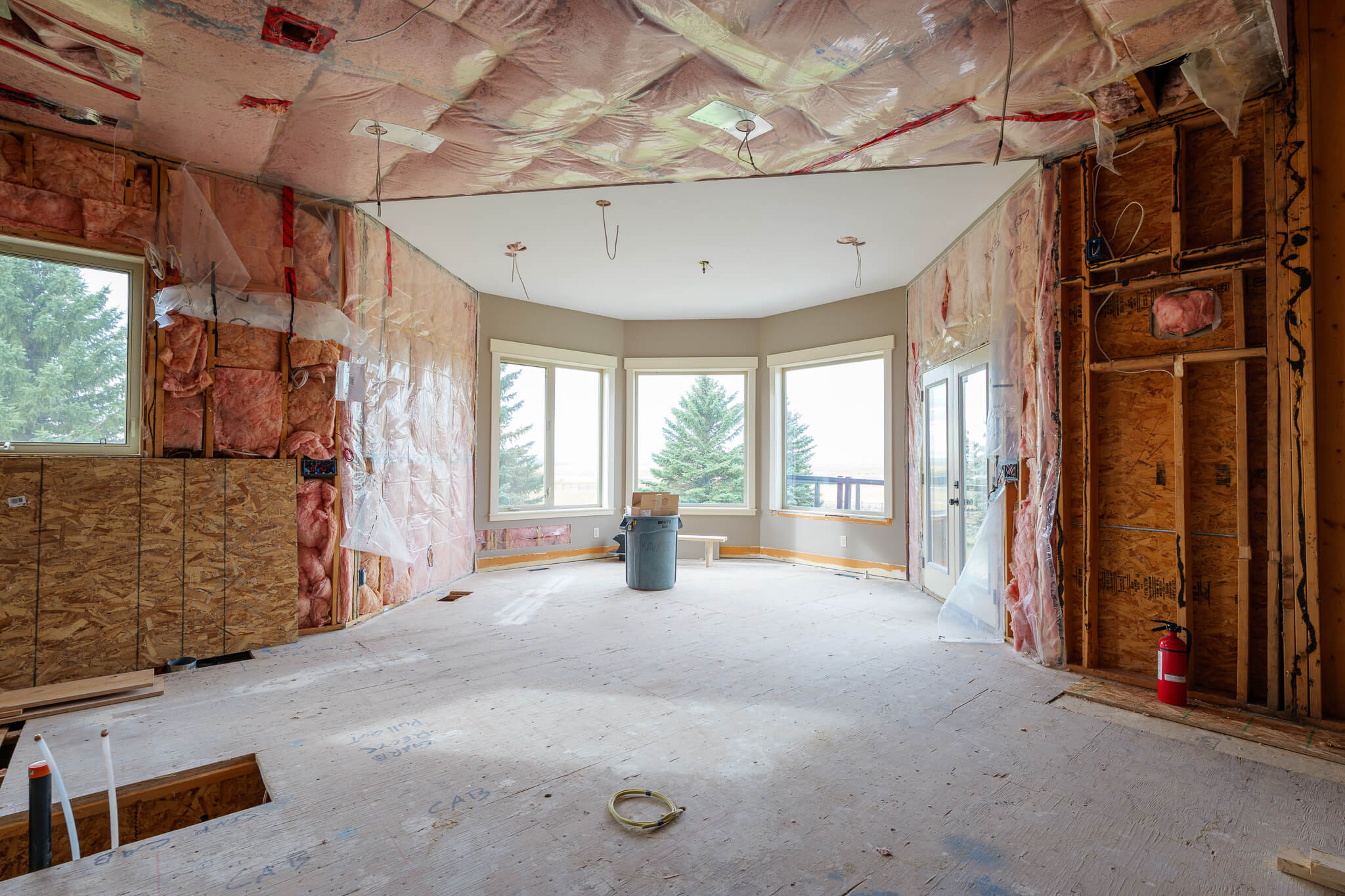
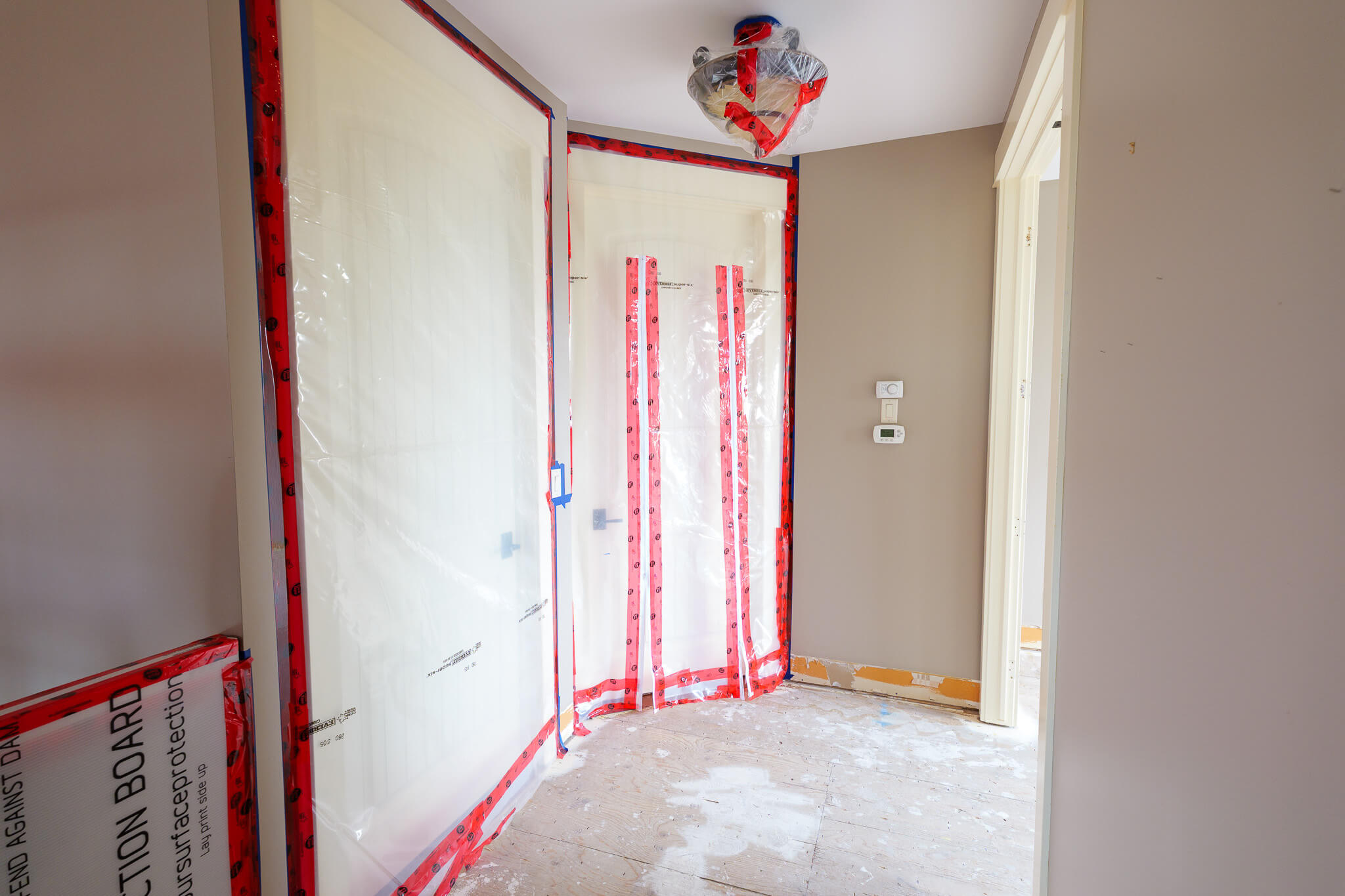
We use poly walls and zipper doors to seal off the active work zone, so dust and debris stay contained to the areas being renovated. Beyond those barriers, the rest of the home remains clean and usable.
Floor and surface protection throughout.
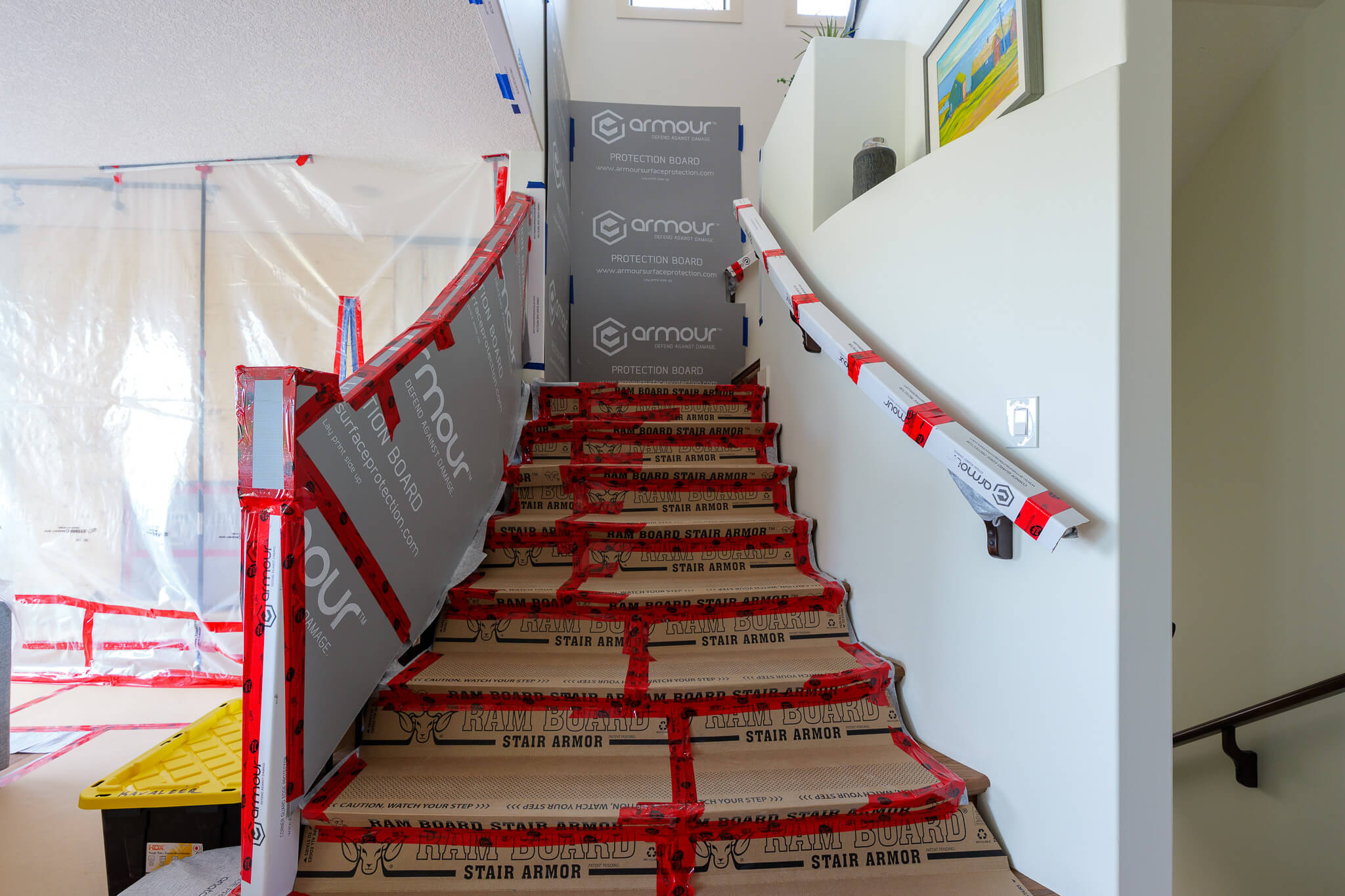
We protect finished surfaces that are not part of the renovation, including flooring in the paths of travel, existing doors, stair treads, and features like railings that are staying as part of the finished design. The goal is that nothing being kept gets damaged during the project.
Maintained access to critical systems.
Where family members need ongoing access to mechanical rooms, laundry, specific bathrooms, or exit routes, we plan the construction sequence so those areas remain reachable throughout the project.
Managed power, water, and heating.
We coordinate the timing of any system interruptions so they are communicated in advance and resolved as quickly as possible. For families staying in the home, this matters significantly to daily routine.
Protected transitions between finished and unfinished spaces.
In projects where the family is moving between the construction zone and their living area regularly, we take extra care to protect stairs and transition points so sawdust and debris do not get tracked into the living space.
Before any construction begins, this is part of the conversation we have with homeowners who are planning to stay. The right setup makes a significant difference in how workable the renovation feels day to day.
When Moving Out Usually Makes More Sense
There are also specific scenarios where staying in the home becomes impractical, or where the quality of life trade-off is simply too significant to justify.
Whole home renovations.
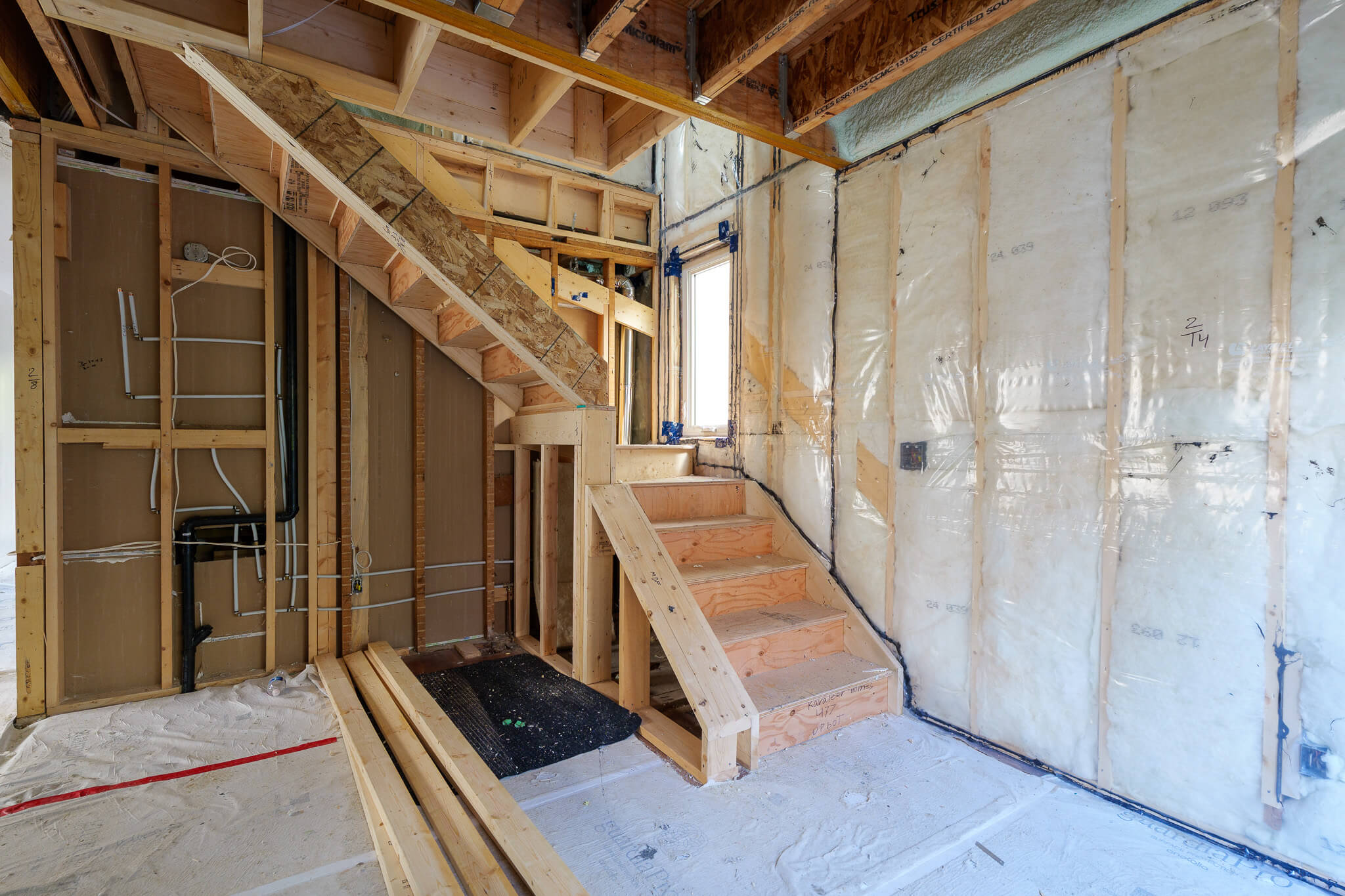
When the scope involves nearly every room in the home - floors being replaced, kitchens and bathrooms being renovated, mechanical systems being upgraded, paint and finishing throughout - there is often no part of the home that remains fully functional for extended periods. In most cases, trying to live through this type of project is not realistic.
Projects involving major mechanical work.
When plumbing, electrical, or HVAC systems are being significantly upgraded, there are periods where water, power, or heating may be unavailable. The duration varies, but for anything beyond a few hours, this becomes a real problem for a family living in the home.
Kitchen renovations without a backup plan.
When the kitchen is the project, the kitchen is unavailable. For families who cook most meals at home, this is a significant disruption over the ten-to-sixteen weeks a kitchen renovation typically takes. A temporary kitchen setup in another part of the home can work, but it is not for everyone.
Projects affecting primary bedrooms or the only bathroom.
If the renovation makes it impossible to sleep comfortably or to have reliable access to a bathroom, moving out is almost always the better call.
Families with young children, elderly family members, pets with sensitivities, or anyone with health conditions affected by dust and noise.
Construction environments are not suitable for everyone. If someone in the household would be meaningfully affected by the dust, air quality, or disruption, that typically tips the decision toward moving out.
Projects involving structural work, additions, or exterior envelope changes.
When walls are being removed, foundations are being extended, or the home is being opened up to the elements, staying in the home is often not safe or practical.
The Options If You Need to Move Out
If moving out is the right call, there are several options to consider, each with trade-offs.
Short-term rental.
Furnished rentals and executive suites are often the most comfortable option for longer stays - you have a kitchen, your own space, and the ability to settle in. The challenge is cost and availability, particularly for stays longer than three months.
Staying with family.
For some families, this is the most cost-effective option. For others, a long stay with parents, siblings, or in-laws can put real strain on relationships and daily routines — and that strain can end up being a bigger cost than the money saved. It is worth being realistic about what will actually work for everyone involved.
Hotels or extended-stay options.
These are typically the least cost-effective for longer projects, but they can be the right short-term bridge if the renovation only requires you to be out for a few weeks.
Renting a nearby home.
Some families choose to rent a home or apartment in the same neighbourhood to maintain their routines - same schools, same commute, same community - while their home is being renovated.
The Costs People Often Forget to Factor In
If you are weighing the live-in versus move-out decision, there are real costs on both sides that are worth understanding.
Costs of moving out:
Rent for the duration of the project, moving expenses, storage for furniture and belongings, utility costs at the temporary residence, meals eaten out more frequently during the transition, and the general wear and strain of being out of your home for an extended period.
Costs of staying in:
Potential impact on sleep, work, and family routines, additional cleaning throughout the project, higher stress levels for everyone in the household, and in some cases, slower progress on the construction itself because trades have to work around the family.
Neither path is free. Being honest about the full cost of each option - financial and otherwise - is part of making the right decision.
How This Decision Affects the Renovation Itself
The live-in versus move-out decision also has real implications for how the project is planned and sequenced.
When the family is staying in the home, the construction has to be phased carefully to maintain functional spaces throughout. Dust containment becomes more significant. Trade scheduling may need to work around the family's routines. Certain types of work - those involving significant noise, air quality impact, or system shutdowns - may need to be scheduled to minimize disruption.
When the family moves out, the project typically moves faster. Trades can work more efficiently, more parts of the home can be worked on in parallel, and the sequencing is driven by what is optimal for construction rather than what is tolerable for daily life.
For whole home transformations or large renovations, this difference can mean weeks or even months of total timeline - which is worth factoring into both the decision and the overall project budget.
How to Think Through the Decision for Your Project
A few questions worth asking yourself as you weigh this decision:
Can my kitchen, bathrooms, and sleeping areas remain functional throughout the project? If the answer is no, moving out is probably the right call.
How long will the construction phase actually take? Shorter projects are easier to live through. Longer projects compound the disruption significantly.
Who is in the household, and how will they handle construction nearby? Young children, elderly family members, pets, and anyone with health conditions deserve honest consideration here.
What is the real cost of each option? Including rent, meals, moving, storage, and the less tangible costs of either disruption or displacement.
How does the family actually feel about construction? Some people genuinely find it energizing to be around a project. Others find it genuinely exhausting. Both are valid, but they lead to different decisions.
These are the kinds of questions we work through with homeowners during the planning phase, because they shape how the project is designed, sequenced, and priced.
This Is Part of the Planning Conversation
The live-in versus move-out decision is one of several logistical questions that are best worked through during the planning phase of a renovation, not after construction has started. By the time the project is ready to begin, you should have a clear plan for where your family will be, how the home will be managed throughout the build, and what the construction sequence looks like given that decision.
Our planning phase is designed to address these kinds of questions as part of a broader conversation about how your renovation will actually unfold - not just what it will look like at the end.
Planning a Major Renovation?
If you are considering a significant renovation and want to think through what it would actually mean for your family - including whether to live in the home or move out - we would be glad to have that conversation.
The best starting point is a consultation where we can learn more about your home, your project, and your family's situation, so we can help you make the right call for your specific renovation.